
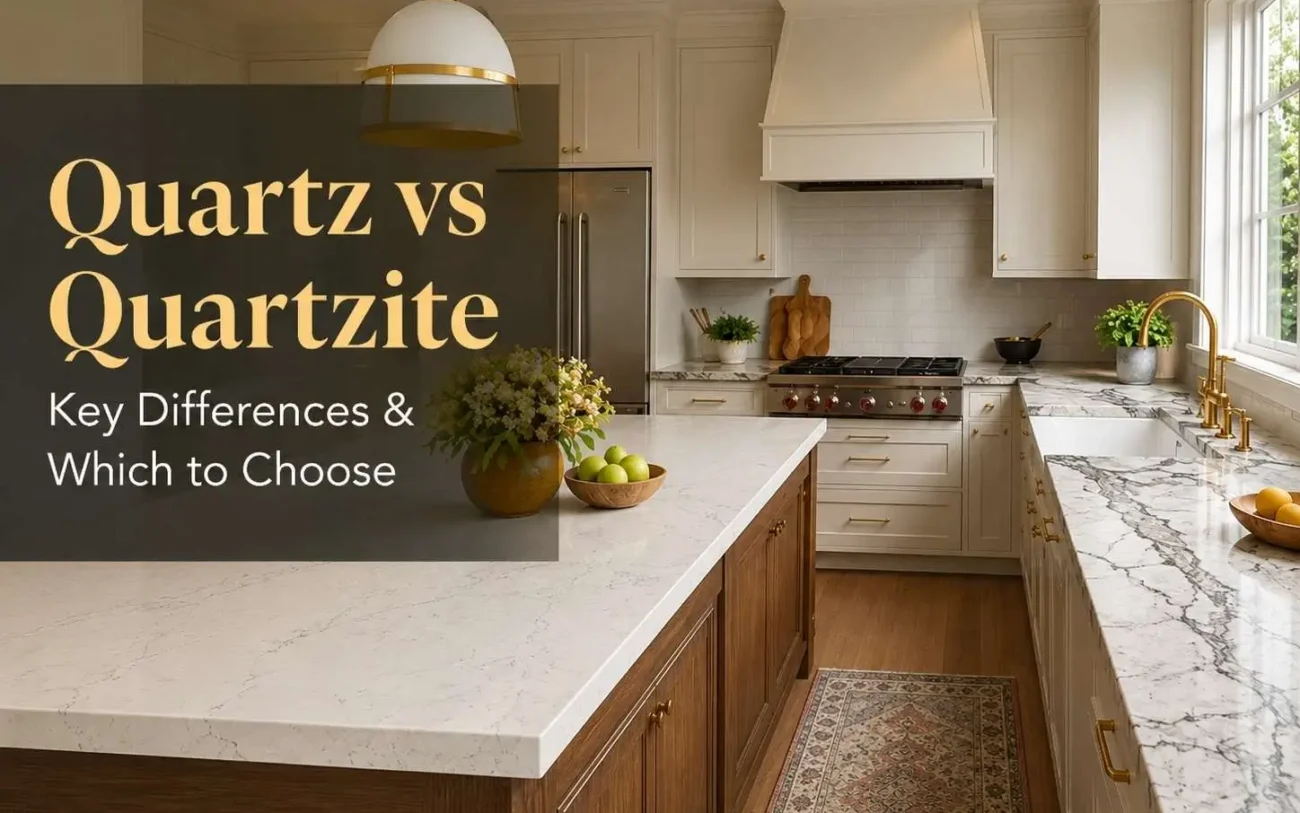
Quartz and quartzite may sound similar, but they are very different countertop materials. Quartz countertops are engineered using quartz minerals, resins, and pigments, while quartzite is a natural stone quarried from the earth. Both work well in kitchens, but they differ in appearance, heat resistance, stain resistance, maintenance, and natural variation.
If you are comparing quartz countertops for your Cape Coral home with quartzite, the right choice depends on how you use your kitchen and what you value most. Quartz offers a more consistent look and easier upkeep, while quartzite provides natural veining and unique character. Understanding these differences can help you choose the surface that best fits your cooking habits, cleaning routine, and design preferences.
Quartz vs Quartzite: What Is the Difference?
Quartz and quartzite are not the same countertop material. Quartz is an engineered surface made with quartz material, binders, and pigments, while quartzite is a natural stone that forms in the earth and is quarried into slabs. That difference affects appearance, maintenance, stain resistance, heat tolerance, and how consistent each surface looks.
What Is a Quartz Countertop?
A quartz countertop is an engineered surface, not a solid slab of naturally quarried quartz. Manufacturers combine quartz material with resins or other binders and pigments to create countertop slabs. Because the material is manufactured, quartz can offer more consistent colors and patterns, which makes it easier to achieve a uniform look across a kitchen.
What Is Quartzite?
Quartzite is a natural stone formed through geological heat and pressure before being quarried and cut into slabs. Its veining, color, and movement develop naturally, so each slab can look different. Homeowners choosing quartzite should expect natural variation rather than an exact match from one slab to the next.
Quartz vs Quartzite: Key Differences at a Glance
Quartz and quartzite can both work well for kitchen countertops, but they differ in how they are made, how they look, and how much care they need. This quick comparison highlights the main differences homeowners should understand before choosing between them.
| Compare | Quartz | Quartzite |
|---|---|---|
| Material | Engineered surface | Natural stone |
| Appearance | More controlled and consistent | Natural variation and veining |
| Sealing | Typically does not require sealing | May require sealing |
| Stain resistance | Generally low porosity | Varies by stone and sealing |
| Heat | Direct high heat should be avoided | Handles heat differently, but protection is still recommended |
| Maintenance | Lower routine maintenance | Requires more attention to natural stone care |
| Best fit | Consistency and easy upkeep | Natural variation and stone character |
Neither material is automatically better. The better fit depends on whether you prioritize predictable appearance and easier maintenance or the natural variation and character of stone.
Quartz vs Quartzite Durability: Scratches, Heat, and Stains
Both materials are durable kitchen surfaces, but their weaknesses are different. The right choice depends on how each surface handles everyday issues such as scratches, hot cookware, spills, and moisture.
Scratch Resistance
Quartzite is a hard natural stone, but durability can vary from one slab to another, especially because stones sold under the quartzite name may not all perform the same way. Quartz also holds up well to normal kitchen use, but neither surface should be treated as scratch-proof. Using a cutting board helps protect both the countertop and your knives.
Heat Resistance
Quartz contains resins and other binders, so direct or sustained high heat can damage the surface. Hot pans, baking trays, and countertop appliances should sit on trivets or heat-resistant pads rather than directly on quartz.
Quartzite handles heat differently because it is natural stone, but that does not mean heat protection is unnecessary. Natural stone care guidance still recommends using trivets or mats under hot cookware to reduce the risk of damage.
Stain and Moisture Resistance
Quartz is generally easier to manage around spills because most quartz surfaces have very low porosity. Quartzite is natural stone, so its absorption rate can vary by slab. Sealing can improve stain resistance where needed, but it does not make quartzite completely stain-proof. Wiping up spills promptly is a good practice for either material.
Quartz vs Quartzite Maintenance: Which Takes Less Work?
Quartz generally requires less routine maintenance, while quartzite needs natural-stone care and may require sealing depending on the slab.
For quartz, everyday cleaning is usually simple. Mild soap, water, and a soft cloth are enough for routine care. Quartz typically does not need sealing, but homeowners should still follow the care instructions provided by the manufacturer. Harsh chemicals or unsuitable cleaners can damage the finish or affect the surface over time.
Quartzite needs a little more attention because it is a natural stone. Spills should be cleaned promptly, and stone-safe cleaning products are the better choice for regular care. Some quartzite countertops may also need sealing, but there is no universal schedule that applies to every slab. How often sealing is needed can depend on the stone itself, the finish, how heavily the countertop is used, and the type of sealer applied. The goal is to protect the surface without assuming every quartzite countertop needs the same maintenance routine.
How Do Quartz and Quartzite Look Different in a Kitchen?
Quartz provides greater control over pattern and color, while quartzite offers the natural variation of quarried stone.
Quartz countertops are manufactured, so colors and patterns can be made more consistent from one section to another. Many quartz designs also imitate the look of marble or other natural stones, which gives homeowners a wide range of styles without as much variation between slabs.
Quartzite looks more organic because its veining, color shifts, and movement form naturally. Each slab can be different, so homeowners should expect some variation across a larger kitchen or island.
So, which is nicer, quartz or quartzite? It comes down to personal preference. Quartz may be the better fit if you want a more predictable, uniform appearance. Quartzite may appeal more if you value natural veining and the unique character of real stone.
Quartz vs Quartzite Cost: What Actually Affects the Price?
Quartz vs quartzite cost can vary widely because neither material has one fixed price. The final project cost depends on the specific surface you choose and how much fabrication and installation work the kitchen requires.
For quartz, pricing can change based on the brand, collection, color, and finish. With quartzite, slab availability, rarity, and the specific stone can have a major effect on price.
Other factors that influence both materials include:
- Slab size and total material needed
- Countertop thickness
- Kitchen layout
- Sink, faucet, or cooktop cutouts
- Edge profile
- Number and placement of seams
- Fabrication complexity
- Installation requirements
Because these details vary from one project to another, comparing quartz and quartzite by material name alone does not give a complete picture of the final cost.
Quartz vs Quartzite for Kitchen Countertops: Which Should You Choose?
Choose based on how you use your kitchen, how much maintenance you want, and whether you value consistency or natural variation most. Both materials can work well, but they suit different priorities.
Choose Quartz for Easier Maintenance
Quartz is a practical choice for homeowners who want straightforward everyday care. Most quartz products do not require routine sealing, and their manufactured patterns provide a more consistent appearance across countertop sections. Regular cleaning is generally simple when you follow the manufacturer’s care instructions.
Choose Quartzite for Natural Beauty
Quartzite may be a better fit if you prefer the movement, veining, and variation found in natural stone. Each slab has its own characteristics, which can make the finished kitchen feel more unique. The tradeoff is that quartzite may require sealing and more attention to natural-stone care.
Best Choice for a Busy Kitchen
Think about frequent spills, children, heavy cooking, and your cleaning habits. Quartz may appeal to homeowners who want less maintenance, while quartzite can still work well if you are comfortable with sealing when needed. With either surface, cutting boards and trivets help protect the countertop during daily use.
Still Comparing Countertop Materials?
If quartz and quartzite are not your only options, comparing granite vs quartz countertops can help you understand how another natural stone compares with engineered quartz.
Frequently Asked Questions
Neither material is universally better. Quartz is often easier to maintain and offers a more consistent appearance, while quartzite provides natural variation and typically handles heat differently from engineered quartz. The better choice depends on your priorities for maintenance, staining, appearance, and everyday kitchen use.
That depends on the look you prefer. Quartz offers a wider range of controlled colors and patterns, which can create a more consistent design. Quartzite has natural veining and variation, so each slab has its own character. Neither is automatically nicer. It comes down to your style preferences.
Some quartzite countertops may need sealing, but there is no single schedule that applies to every slab. Sealing needs depend on the stone, finish, use, and sealer. A proper sealer can improve stain resistance, but it does not make natural stone completely stain-proof.
A hot cup of coffee is different from placing very hot cookware directly on quartz. Normal kitchen use is generally less concerning, but homeowners should still follow the care instructions provided by the quartz manufacturer. Use trivets or heat-resistant pads under hot pans, appliances, and other high-heat items.
Conclusion
When comparing quartz vs quartzite, the right choice comes down to how you use your kitchen and what matters most to you. Quartz is often a better fit for homeowners who want easier maintenance and a more consistent appearance. Quartzite may suit those who prefer the natural movement and character of real stone and are comfortable with additional care.
Before deciding, it helps to view full slabs in person, since natural variation can be difficult to judge from a small sample or screen. As a countertop contractor in Cape Coral, Affordable Marble & Granite of Fl Inc. can help you compare your options and choose a countertop material that fits your kitchen, maintenance preferences, and design goals.